A refraction test is essentially how your eye doctor figures out the exact prescription you need for glasses or contact lenses. It pinpoints whether you have common vision issues like nearsightedness, farsightedness, or astigmatism. Think of it as the core measurement for correcting your vision, and it’s usually just one part of a more extensive eye exam that checks your overall eye health.
1. What Exactly Is a Refraction Test?
Let’s cut right to it. A refraction test is a fundamental part of an eye exam, specifically designed to figure out your vision prescription. It’s the process where the eye doctor determines the precise corrective power your eyes need to see clearly. This isn’t just a guess; it’s a careful measurement to correct what’s called a “refractive error.” Essentially, your eye doctor wants to know if your eye focuses light exactly where it should on your retina or if it’s a little off. If it’s off, that’s a refractive error, and the refraction test tells us how to fix it with lenses.
How It Identifies Refractive Errors
Our eyes work by bending (refracting) light onto the retina at the back of the eye. When light doesn’t focus perfectly on this spot, you have a refractive error. The refraction test helps identify the exact nature and degree of this error. It’s like a precise calibration for your natural lens system. Without proper refraction, images appear blurry, distant objects might be unclear, or close-up tasks could be a struggle. The test is designed to find the lens power that brings everything into sharp focus, mimicking what a perfectly functioning eye would do.
A refraction test is a crucial procedure used to determine an individual’s prescription for glasses or contact lenses, helping to correct vision issues such as nearsightedness, farsightedness, and astigmatism. For those looking to understand more about eye care and vision correction, a related article can be found at SmilePro Blog, which offers valuable insights into various eye health topics and the importance of regular eye examinations.
2. Part of a Bigger Picture: Comprehensive Eye Exams
It’s important to understand that a refraction test rarely happens in isolation. While crucial for vision correction, it’s typically one segment of a more thorough eye examination. Think of it as a specialized tool within a larger toolkit. A comprehensive eye exam goes beyond just figuring out your prescription; it’s a full health check-up for your eyes. This holistic approach ensures that any underlying health issues affecting your vision or eye health are also detected.
Beyond Just Prescription: Eye Health Checks
When you go for an eye exam, your doctor isn’t just looking at how well you see. They’re also checking the overall health of your eyes. This includes looking for signs of common eye diseases that might not even have symptoms yet. For example, they’ll often check your eye pressure to screen for glaucoma, a condition that can lead to irreversible vision loss if not caught early. They might also examine the retina, the light-sensitive tissue at the back of your eye, for issues like diabetic retinopathy or macular degeneration. These health checks are vital because clear vision is just one component of healthy eyes; preventing or managing eye diseases is equally important for long-term sight.
3. Targeting Common Vision Problems
The refraction test is specifically designed to pinpoint and quantify the most common vision problems that people experience. These aren’t usually signs of disease but rather structural variations in how your eye processes light. The good news is that these issues are typically very correctable with the right lenses. Understanding what these problems are can help demystify what the test is looking for.
Nearsightedness (Myopia)
Nearsightedness, or myopia, is when you can see objects up close clearly, but distant objects appear blurry. This happens because the light entering your eye focuses in front of your retina, rather than directly on it. It’s a very common condition, often developing during childhood or adolescence. The refraction test helps determine the specific lens power needed to shift that focal point backward, so distant objects come into sharp focus. If you struggle to read road signs until you’re very close or can’t make out faces across a room, myopia might be the culprit.
Farsightedness (Hyperopia)
On the flip side, farsightedness, or hyperopia, means you might see distant objects relatively clearly, but close-up tasks like reading become blurry and can cause eye strain. In this case, light focuses behind the retina. Your eyes might try to compensate by working harder to focus, which can lead to headaches or fatigue, especially after extended periods of reading or computer work. The refraction test identifies the correct lens power to help bring that focal point forward, making close-up vision much more comfortable and clear.
Astigmatism
Astigmatism is a bit different. It’s not about where the light focuses, but how it focuses. With astigmatism, your cornea (the front surface of your eye) or the lens inside your eye has an irregular curve – imagine it’s shaped more like a football than a perfectly round basketball. This irregular curvature causes light to focus on multiple points on the retina, leading to distorted or blurred vision at all distances. People with astigmatism might see lines or letters appear smeared or stretched. The refraction test is particularly good at identifying the specific angles and powers needed to correct this irregular focusing, often requiring a special type of lens called a toric lens.
4. The Process: What to Expect During the Test
During a refraction test, you’ll be actively involved, though it’s a very straightforward and comfortable process. There are a few standard methods your eye doctor might use, but the core idea remains the same: finding the clearest view for you. You won’t need to do anything special to prepare, and it’s generally quite quick.
The Phropter and Eye Charts
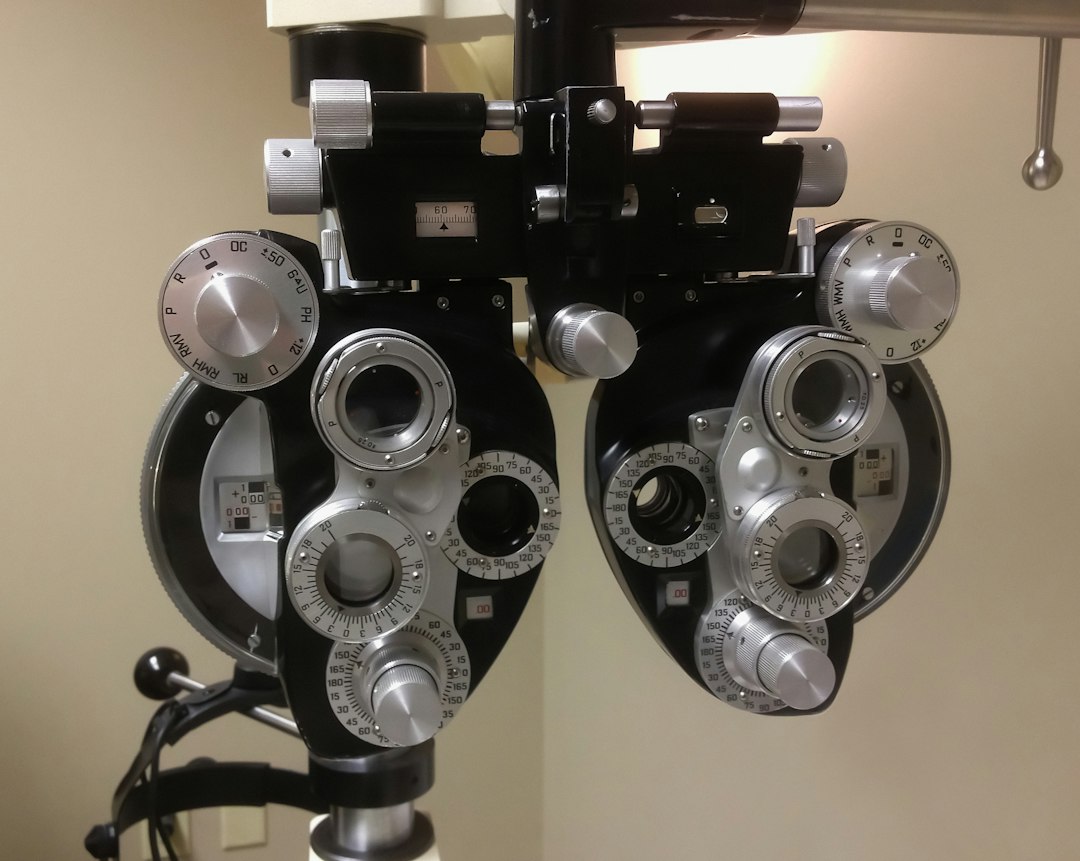
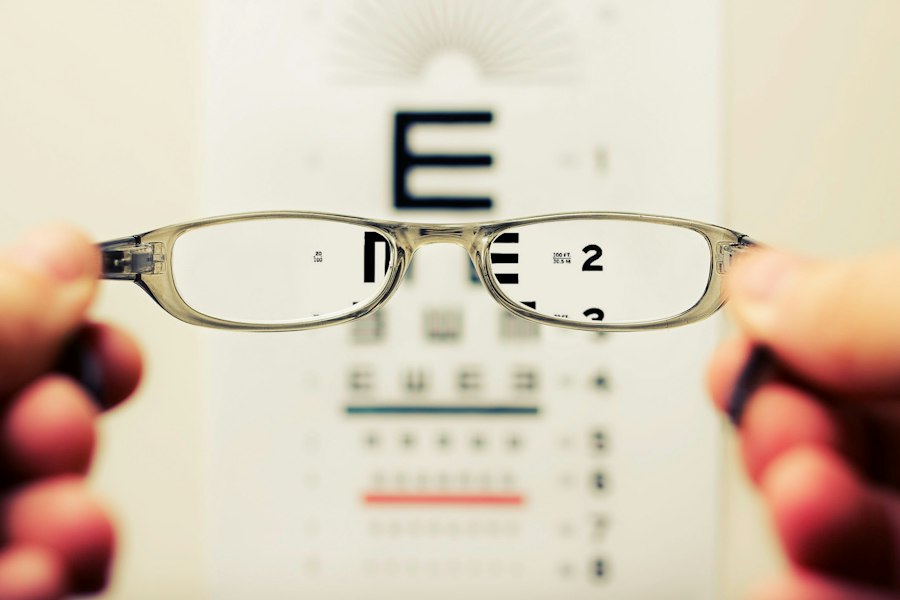
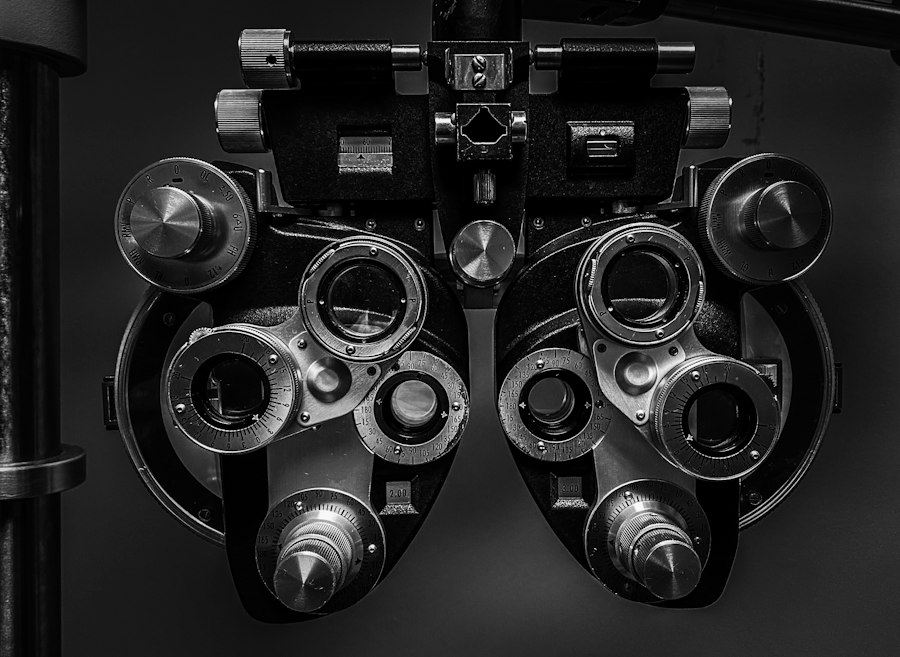
The most recognizable part of a refraction test involves sitting behind a large, automated instrument called a phoropter. This device holds multiple lenses that the examiner can quickly switch between. You’ll look through it at an eye chart, which is usually projected onto a screen a set distance away. The classic “E” chart, or charts with letters and numbers of decreasing size, are common. The doctor will ask you to read the smallest line of letters you can, and then, using the phoropter, will rapidly flip between two slightly different lenses, asking, “Which one is clearer, number one or number two?” Your honest answers guide them to the optimal lens power. This back-and-forth comparison is crucial for fine-tuning your prescription.
Trial Frames and Specific Scenarios
Sometimes, especially if your prescription is complex or you’re trying out progressive lenses, your doctor might use trial frames. These are like regular glasses frames, but they allow the doctor to insert individual lens samples to let you experience the new prescription in a more natural way. You might even be asked to walk around a bit or read something up close to get a feel for how the lenses perform in different real-world scenarios. This can be particularly helpful for ensuring comfort and functionality, especially for those with unique visual needs or who are getting their first prescription.
A refraction test is an essential procedure used to determine an individual’s prescription for glasses or contact lenses, helping to assess how light is focused in the eyes. If you’re interested in learning more about eye care and related topics, you might find this article on eye health particularly insightful. It covers various aspects of maintaining good vision and understanding common eye tests. For more information, you can read the article here: eye health.
5. Technology Helping the Doctor
| Aspect | Description | Typical Values/Range |
|---|---|---|
| Purpose | To determine the correct prescription for eyeglasses or contact lenses by measuring how light bends as it enters the eye. | N/A |
| Test Methods | Manual refraction (using phoropter), automated refraction (autorefractor), retinoscopy. | N/A |
| Measurement Units | Diopters (D) – unit of lens power. | Typically ranges from -12.00 D (myopia) to +12.00 D (hyperopia) |
| Common Metrics | Spherical power, cylindrical power, axis of astigmatism. |
Spherical: -12.00 D to +12.00 D Cylindrical: 0 to -6.00 D Axis: 0° to 180° |
| Duration | Time taken to complete the test. | 5 to 15 minutes |
| Age Range | Applicable for all ages, including children and adults. | All ages |
| Accuracy | Depends on method; manual refraction is subjective, autorefractors provide objective measurements. | ±0.25 D typical margin of error |
While your input is essential for the final prescription, modern eye care often starts with technology that gives the doctor a head start. These tools provide objective measurements, meaning they don’t rely on your verbal responses. This speeds up the process and can be especially helpful for children or individuals who have difficulty communicating.
Autorefractors: The First Guess
Many eye exams begin with an autorefractor. This is a computer-controlled machine that you look into, often at a picture or a light. It rapidly measures how light is bent as it enters your eye and then bounces back out. The autorefractor quickly estimates your prescription by analyzing these light reflections. It’s like an initial, automated “guess” at your prescription. This reading gives the eye doctor a good starting point, saving time and making the manual refraction process more efficient. While it’s a great preliminary tool, it’s rarely the final word, as it doesn’t account for your subjective comfort and clarity.
Retinoscopy: Measuring Without Your Input
Another objective method is retinoscopy. In this technique, the eye doctor shines a light into your eye and observes the light reflection (red reflex) from your retina. By moving lenses in front of your eye and watching how the red reflex moves, they can determine your refractive error. This method is particularly useful for infants, young children, or individuals with communication challenges, as it doesn’t require any verbal input from the patient. It allows the doctor to get a very accurate objective measurement of the eye’s focusing power even if the patient can’t read an eye chart. After these objective measurements, the doctor will still perform the subjective refraction (the “which is clearer, one or two?”) to fine-tune the prescription based on your personal preference.
6. Decoding Your Lens Prescription
Once the refraction test is complete, the results are translated into a prescription that can be filled by an optician for your glasses or contact lenses. This prescription contains specific terms and numbers that might look like a foreign language at first glance, but they all represent precise measurements of your vision needs. Understanding these terms can help you make sense of your eyewear.
Sphere, Cylinder, and Axis
These are the core components of most prescriptions:
- Sphere (SPH): This number indicates the main power of the lens needed to correct nearsightedness or farsightedness. A minus sign (-) usually means you are nearsighted (myopic), while a plus sign (+) or no sign usually indicates farsightedness (hyperopic). The number represents the diopter power, with higher numbers indicating a stronger correction.
- Cylinder (CYL): This measurement addresses astigmatism. If you have astigmatism, this column will have a number, indicating the lens power needed to correct the irregular curve of your eye. No number here means you don’t have astigmatism or it’s negligible.
- Axis: If you have a CYL value, you will also have an Axis value, ranging from 1 to 180 degrees. This number tells the optician the exact orientation or angle at which the cylinder power should be placed in your lens to correct the astigmatism. Think of it as the specific angle of the football shape on your eye.
Understanding ADD for Near Vision
For individuals over 40, you might see an additional number labeled ADD. This stands for “add power” and refers to the extra magnifying power needed for reading or other close-up tasks. As we age, the natural lens inside our eye stiffens, making it harder to focus on near objects – a condition called presbyopia. The ADD power is the extra magnification built into the bottom part of bifocal, trifocal, or progressive lenses to help with this. This number is always positive (+) and is the same for both eyes. It’s added to your distance prescription to give you the clear near vision you need.
7. The Experience: Quick, Simple, and Painless
Perhaps the most reassuring fact about a refraction test is how straightforward and comfortable it is. Many people feel a little nervous about eye exams, but this particular part is nothing to worry about. It’s designed to be efficient and user-friendly.
A Few Minutes, Big Results
While the entire comprehensive eye exam can take a bit longer (depending on what other tests are performed and if dilation is needed), the refraction test itself is typically quite fast. Once the doctor gets started with the phoropter and your “which is clearer?” responses, it can often be completed in just a few minutes per eye. It’s a quick back-and-forth process that rapidly homes in on the optimal prescription. Despite its speed, the results are incredibly precise and vital for improving your daily vision quality.
No Discomfort Involved
Unlike some medical procedures, a refraction test involves absolutely no physical discomfort. You don’t feel anything beyond perhaps the sensation of looking through different lenses. There are no drops, no bright lights pointed directly at your eye for extended periods, and no physical contact with your eye. It’s a completely non-invasive procedure, making it suitable for people of all ages, from young children to seniors. The goal is simply to find the lenses that make your vision the sharpest and most comfortable it can be.
FAQs
What is a refraction test?
A refraction test is an eye exam that measures a person’s prescription for eyeglasses or contact lenses. It determines the amount of refractive error a person has, such as nearsightedness, farsightedness, or astigmatism.
How is a refraction test performed?
During a refraction test, the eye doctor will ask the patient to look through a phoropter and read letters on a chart at a distance. The doctor will then test different lenses to determine which ones provide the clearest vision for the patient.
Who should have a refraction test?
Anyone experiencing vision problems, such as blurry vision, difficulty seeing objects up close or far away, or eye strain, should consider having a refraction test to determine if they need corrective lenses.
Is a refraction test the same as an eye exam?
A refraction test is a part of a comprehensive eye exam, but it focuses specifically on determining a person’s eyeglass or contact lens prescription. A complete eye exam may also include tests for eye health and visual acuity.
How often should someone have a refraction test?
It is recommended that adults have a refraction test every 1-2 years, or as recommended by their eye doctor. Children should have their vision tested regularly, as recommended by their pediatrician or eye care professional.
Leave a Reply